Feb 10, 2026
The 7 Best Farm Hotels in Europe
Restored 13th-century villas. Working farms that predate nations. Nine suites scattered across 1,700 acres.
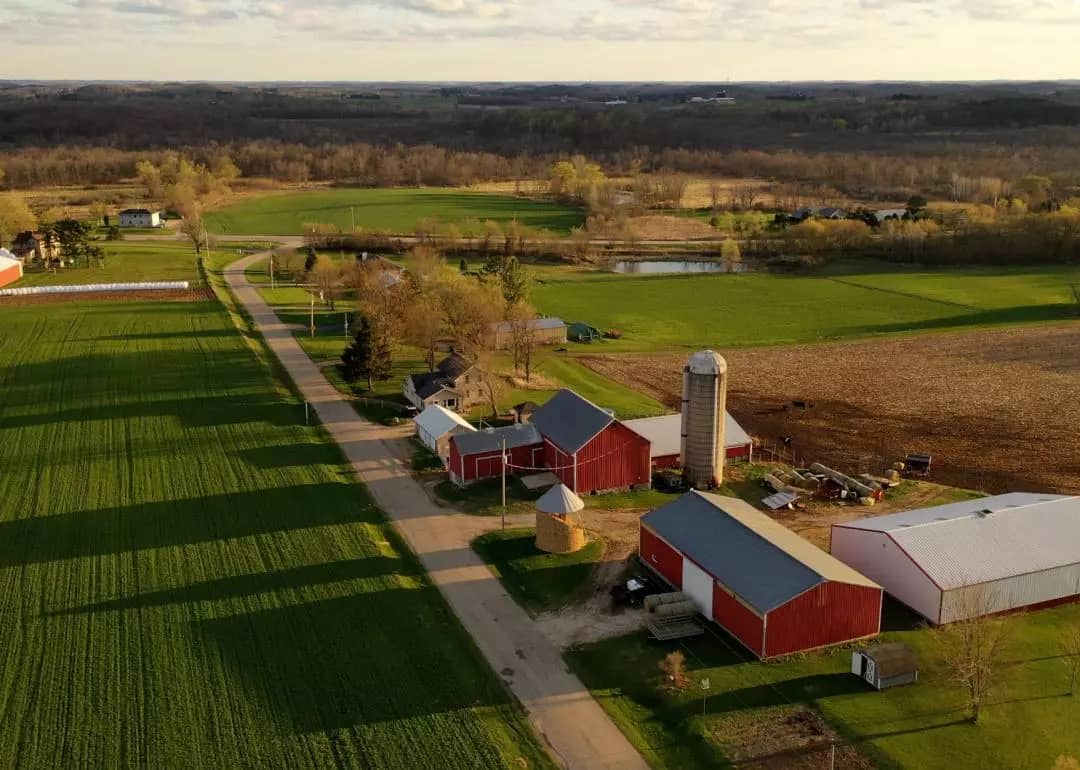
The other week we shared our ranking for the top farm hotels in America.
This week, we're looking at Europe.
In Europe, the regulatory framework has created an entire category built on genuine agricultural heritage. For example in Italy, laws passed in the 1970s allowed farmers to host guests as a way to preserve rural life.
Many European estates have been farming the same land for centuries. The farms came first – sometimes 200, 500, even 800 years before guests arrived.
And though America can’t compete with the depth of history that exists in Europe, the best farm hotels have the same farm-first goal.
But because of the history, some of the European properties are pretty breathtaking.
Here are seven European properties showing what farm hospitality looks like when it’s rooted in tradition.
7. The Rooster – Antiparos, Greece
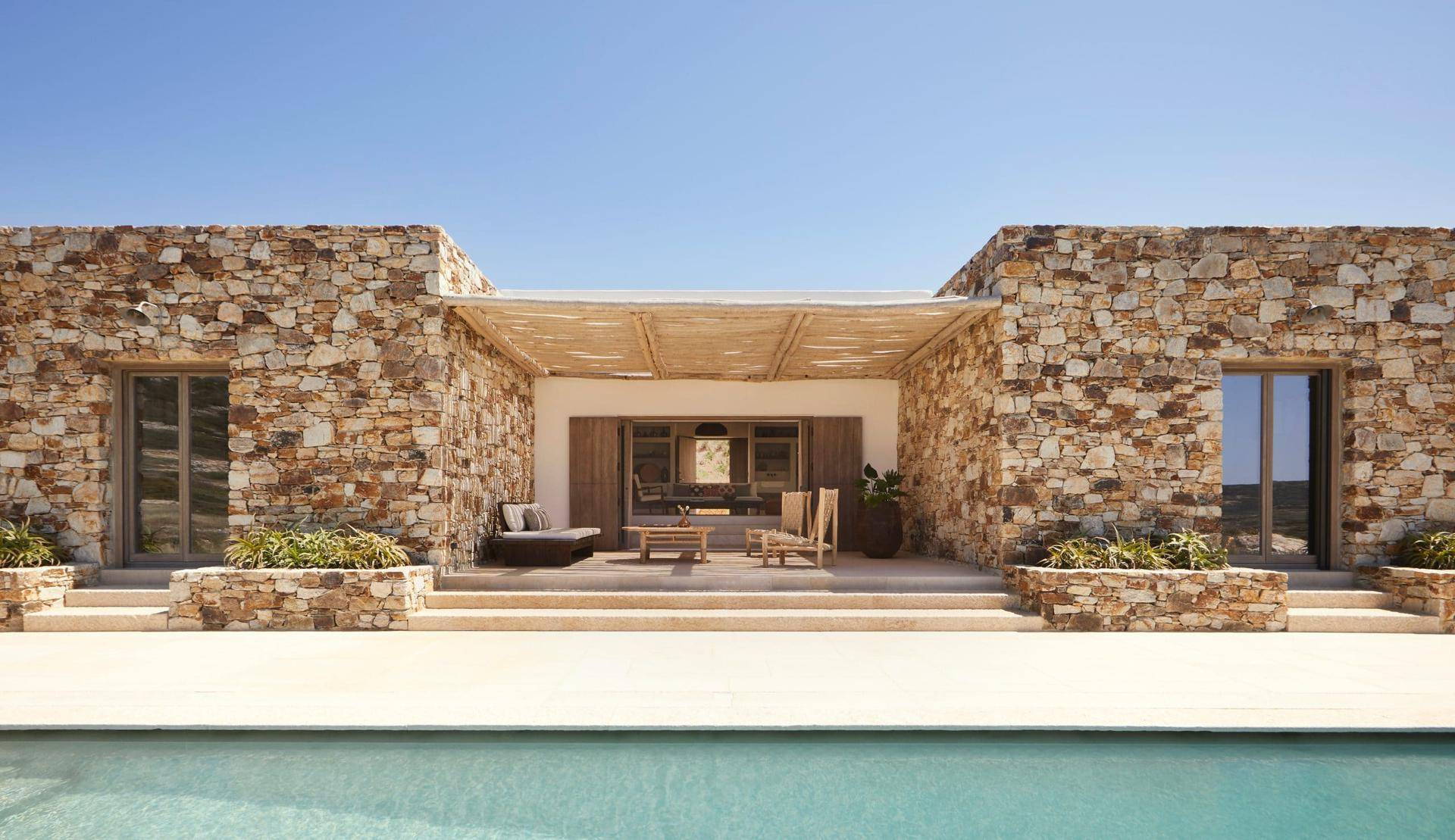 |
A 30-acre organic farm on a quiet Greek island in the Cyclades. Just 17 private villas scattered among sand dunes and hills.
The farm grows Mediterranean produce using permaculture methods. Heirloom tomatoes, eggplants, zucchini, herbs. An orchard yields figs, pomegranates, citrus. Chickens provide daily eggs. Goats give milk for cheese and yogurt. Bees produce thyme-infused honey.
Each morning you might pick herbs and cherry tomatoes alongside the chef for your omelet. Weekly farm-to-table dinners happen in the garden under the stars.
The “House of Healing” spa offers Ayurvedic massages and Greek herbal therapies using ingredients from the farm. Daily sunrise yoga overlooks Livadia Beach.
Slow living and zero-kilometer dining on an Aegean island.
6. Domaine de Murtoli – Corsica, France
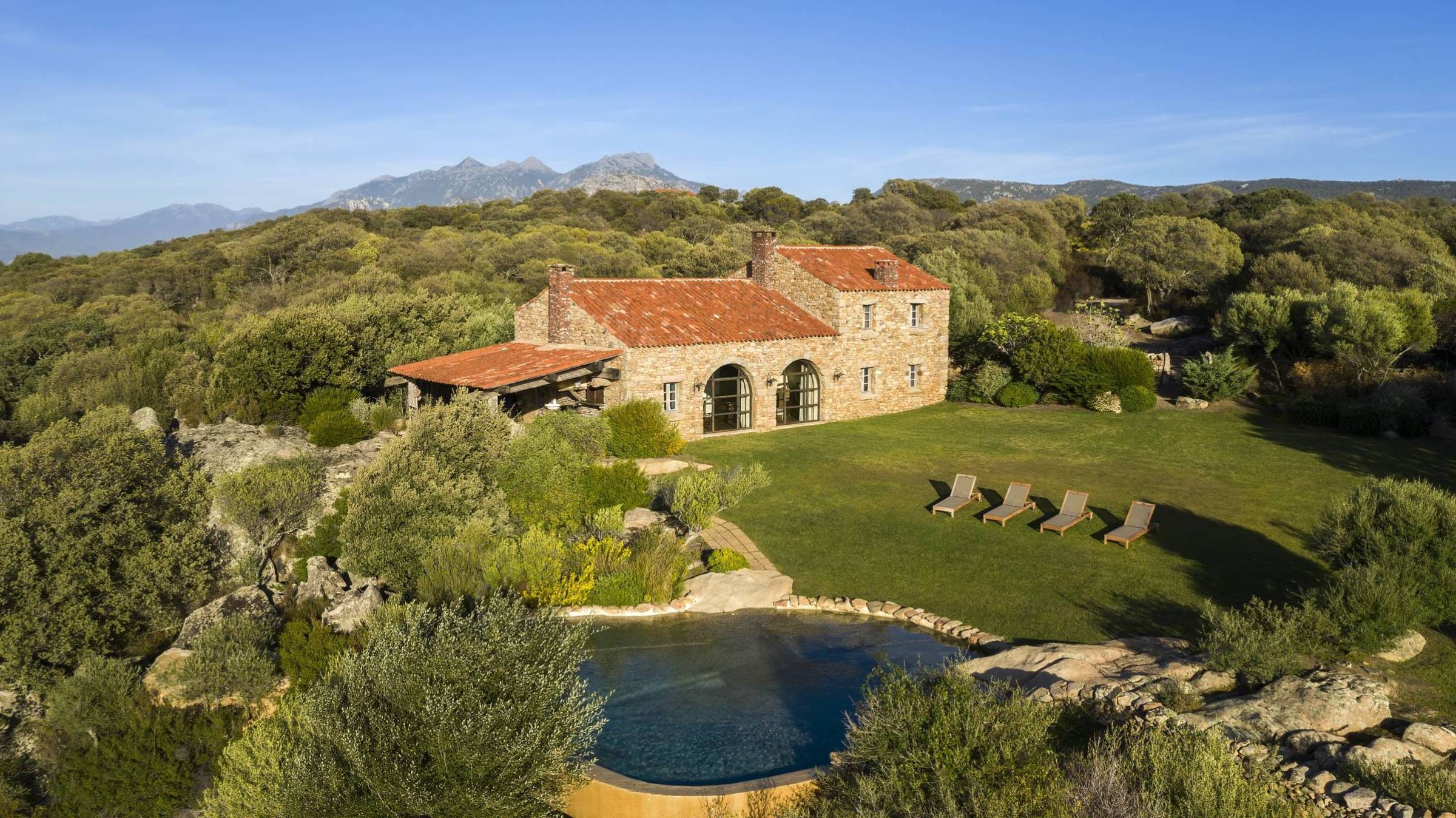 |
6,000 acres of private estate in southern Corsica. Working farm meets pristine Mediterranean coastline.
Instead of a hotel building, restored 17th-century shepherds’ houses scatter across the property. Each is a private villa with a terrace, garden, often a pool.
500 goats produce milk for cheese. Free-roaming pigs become Corsica’s famous charcuterie – coppa, lonzu, prisuttu all cured from estate pigs. Olive groves yield oil pressed in their own mill. The estate still practices traditional transhumance, moving livestock seasonally between lowlands and uplands.
La Table de la Grotte is a gourmet restaurant inside a giant limestone cave lit by candles. You dine in caverns that served as shelters millennia ago.
Meals use vegetables from estate gardens, meats from Murtoli’s herds, daily catches from coastal waters.
Corsican pastoral life at scale.
5. Heckfield Place – Hampshire, England
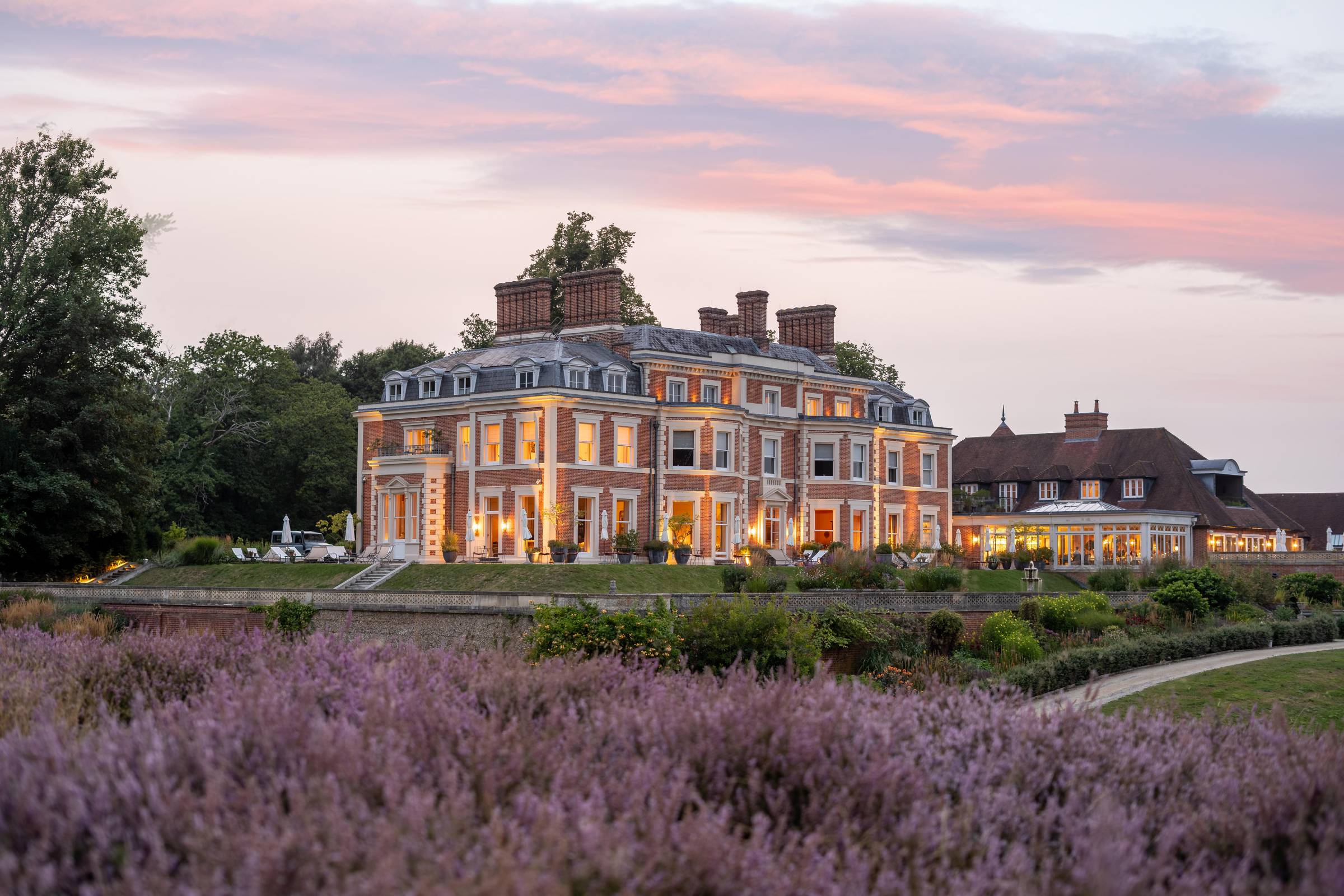 |
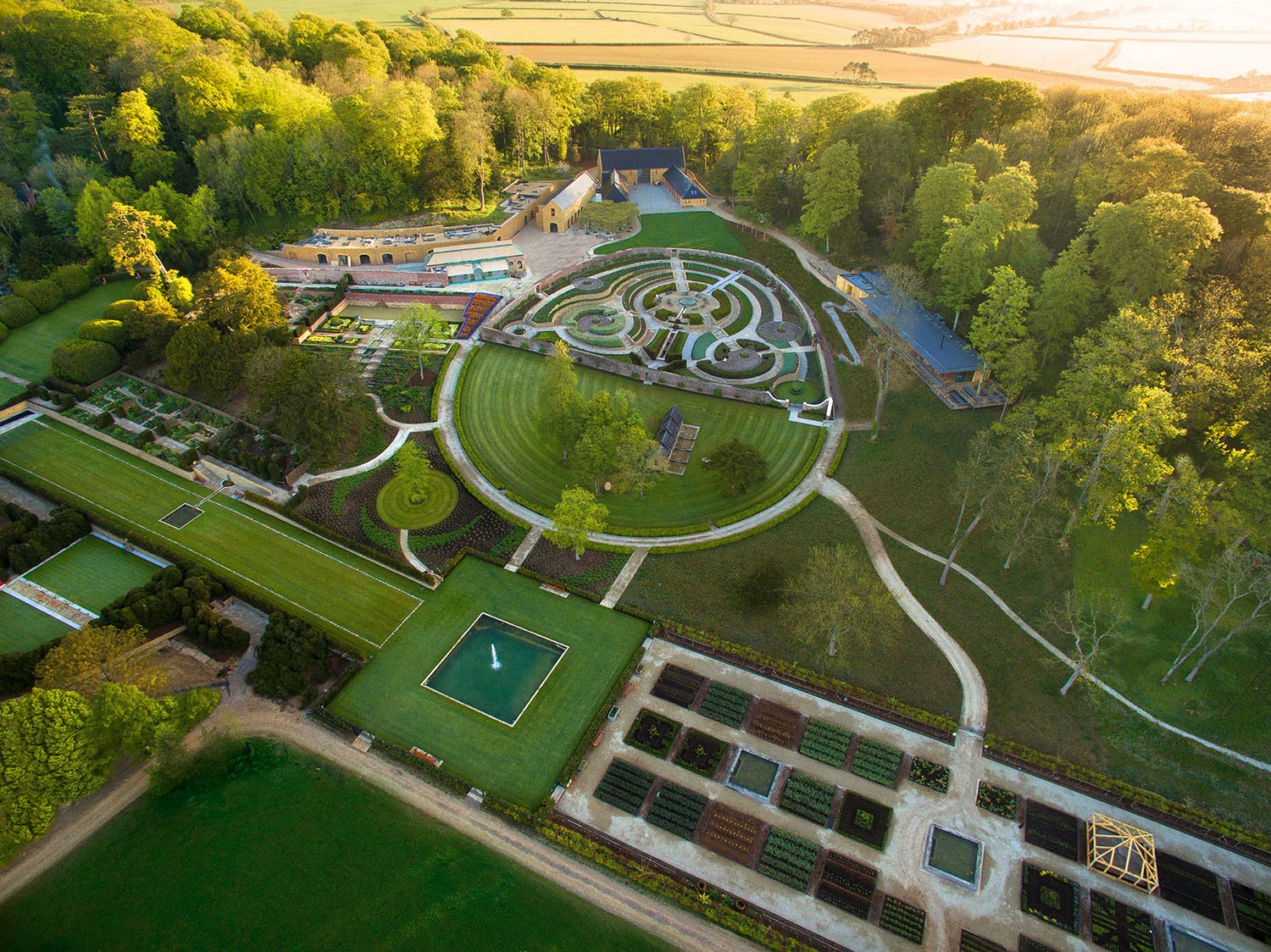
A 438-acre Georgian estate transformed into a model of biodynamic farming. The organic Home Farm supplies virtually all food at Heckfield.
Biodynamic market gardens produce vegetables year-round. The guiding principle: “Here it begins with the soil.” Healthy living soil creates flavorful food and flourishing biodiversity.
Marle restaurant holds a Green Michelin Star. Both restaurants are powered almost entirely by farm produce. The estate ferments and pickles, cures charcuterie, ages meats on-site. Dairy from Heckfield’s cows becomes cultured butter and cheeses.
The Bothy Spa developed its own botanical skincare line – Wildsmith Skin – using flowers, herbs and honey from the estate.
You’re getting the full package experience here of everything English agritourism has to offer.
4. São Lourenço do Barrocal – Alentejo, Portugal
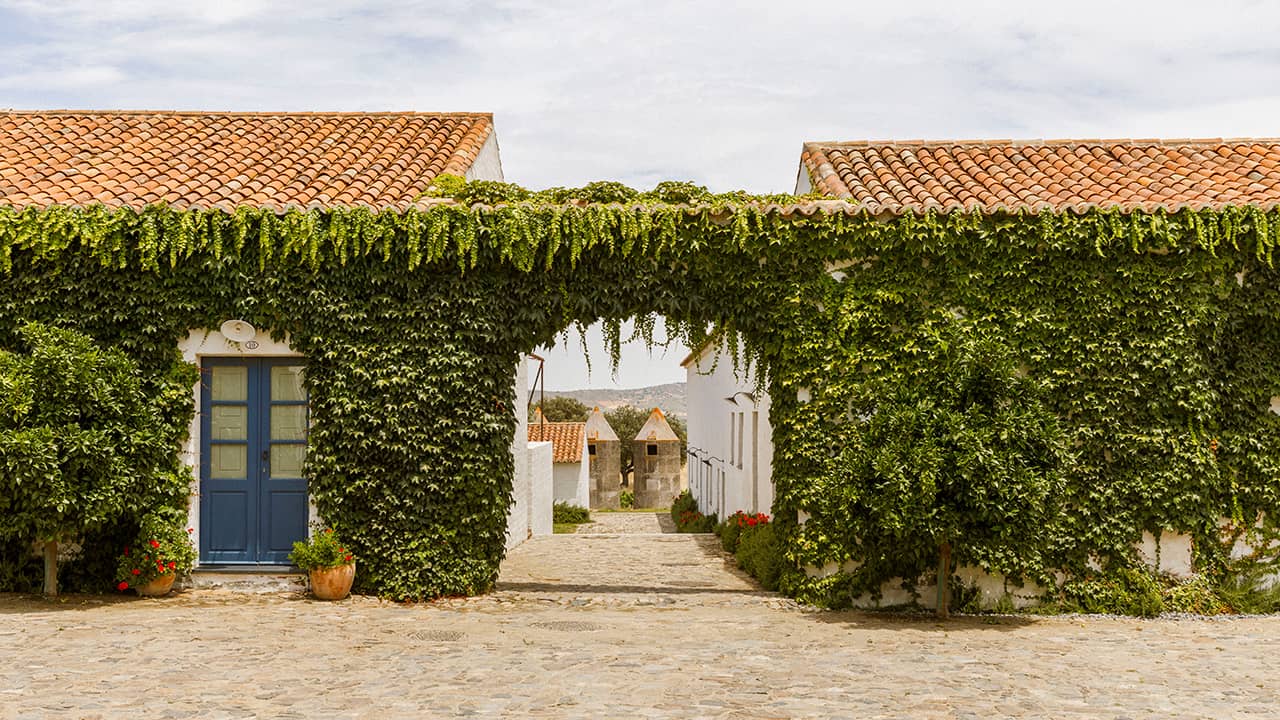 |
A 200-year-old family farm village across 2,000 acres of cork oak forests and pastures. The current owner spent over a decade restoring this estate that’s been in his family for generations.
Wild horses still roam the Alentejo plains like they have for centuries. Traditional whitewashed farm buildings now house guest rooms.
Meals celebrate Alentejo’s rustic cuisine using the estate’s own wine, olive oil, and orchard fruits.
A unique feature here is that Portugal’s tallest standing menhir sits on the property. A 7,000-year-old granite megalith nearly 5.7 meters high.
The owner talks about how being surrounded by this landscape and history allows you to be restored in ways beyond a traditional spa.
Ancient cork oaks. Two centuries of continuous family stewardship.
Heritage preservation and sustainable agriculture all working together.
3. Finca La Donaira – Andalusia, Spain
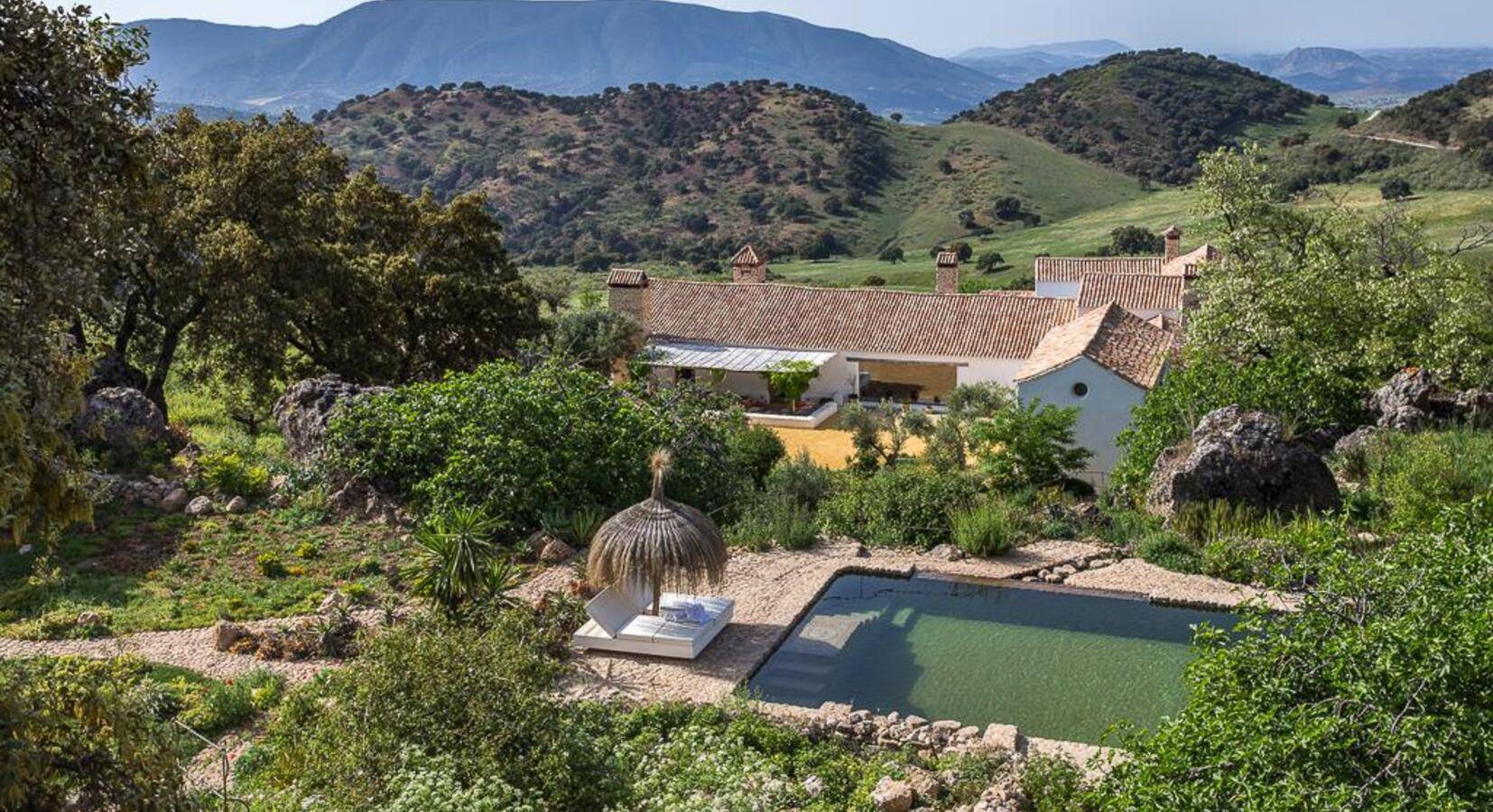 |
1,700 acres of organic farm and wild Andalusian countryside. Only 9 suites across the entire estate.
That’s 188 acres per suite.
Over 70 Lusitano horses roaming free. Herds of sheep and rare cattle breeds. 300+ chickens. The farm operates on strict biodynamic principles – planting by lunar cycles, enriching soil with natural preparations.
Every meal is communal at the farmhouse table. All kitchen scraps return to the farm. Complete zero-waste cycle. They make their own natural wines, breed horses ethically, handcraft soaps to control ingredients.
The spa uses only ingredients grown on-site. Natural swimming pools filtered by plants instead of chemicals.
It won Spain’s Leading Luxury Eco Retreat in 2025. European biodynamic farming at the highest level.
2. Borgo Santo Pietro – Tuscany, Italy
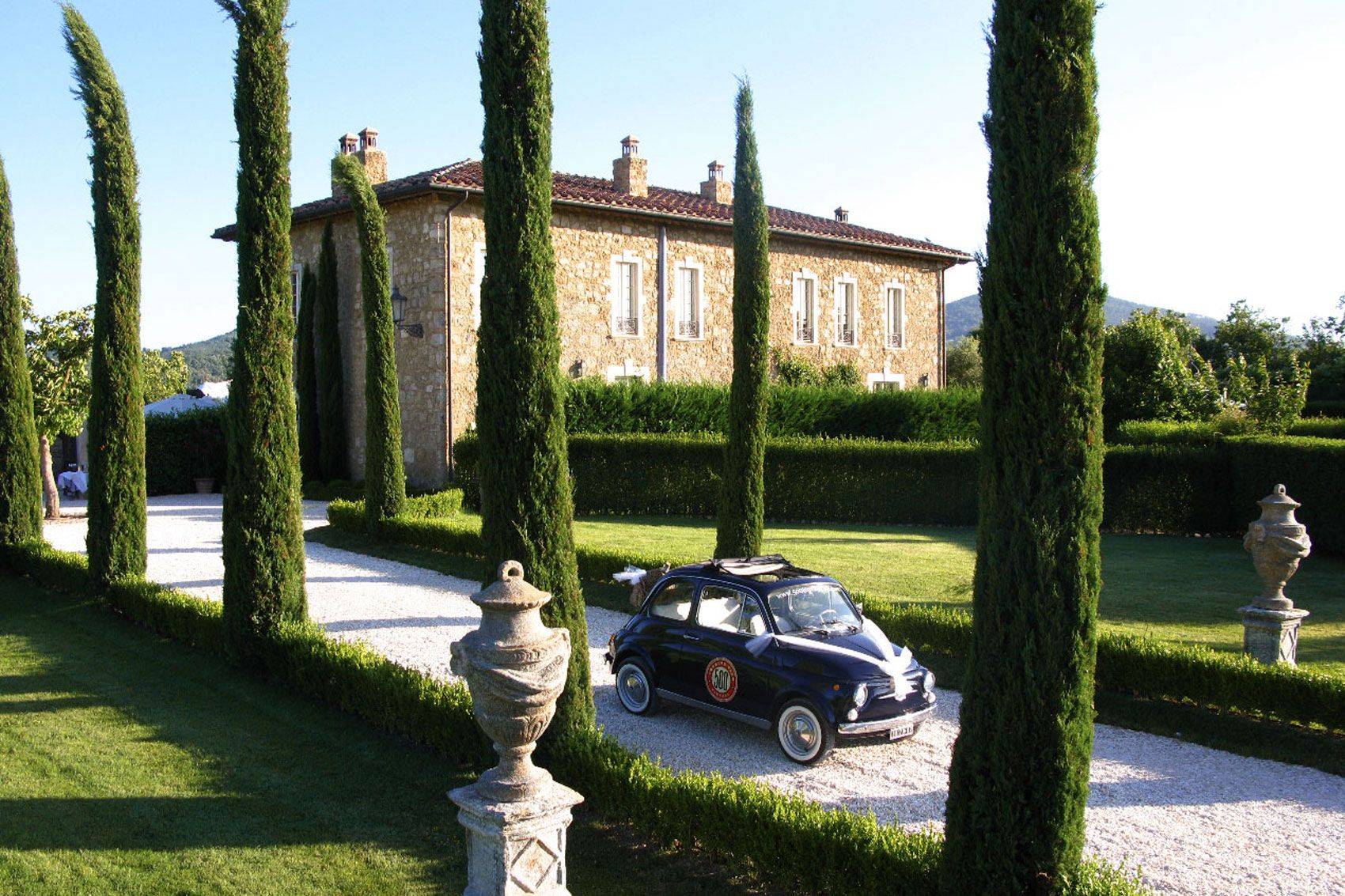 |
This 13th-century borgo was an abandoned ruin in 2001. A Danish couple discovered it and spent seven years restoring it stone by stone.
Today it’s a fully functioning farm ecosystem on 300 acres.
Over 300 sheep provide milk for the on-site artisan dairy. Free-roaming pigs become house-made prosciutto and salumi. A 6-acre medicinal herb garden feeds an on-site laboratory producing “Seed to Skin” skincare products.
The Michelin-starred Saporium restaurant uses only ingredients grown, raised, or foraged on the estate. They keep alpacas to produce wool for blankets and throws in guest rooms.
Both a Michelin Green Star and traditional Michelin Star. 3 Michelin Keys in 2025.
Everything consumed on property is produced on property.
1. The Newt in Somerset – England
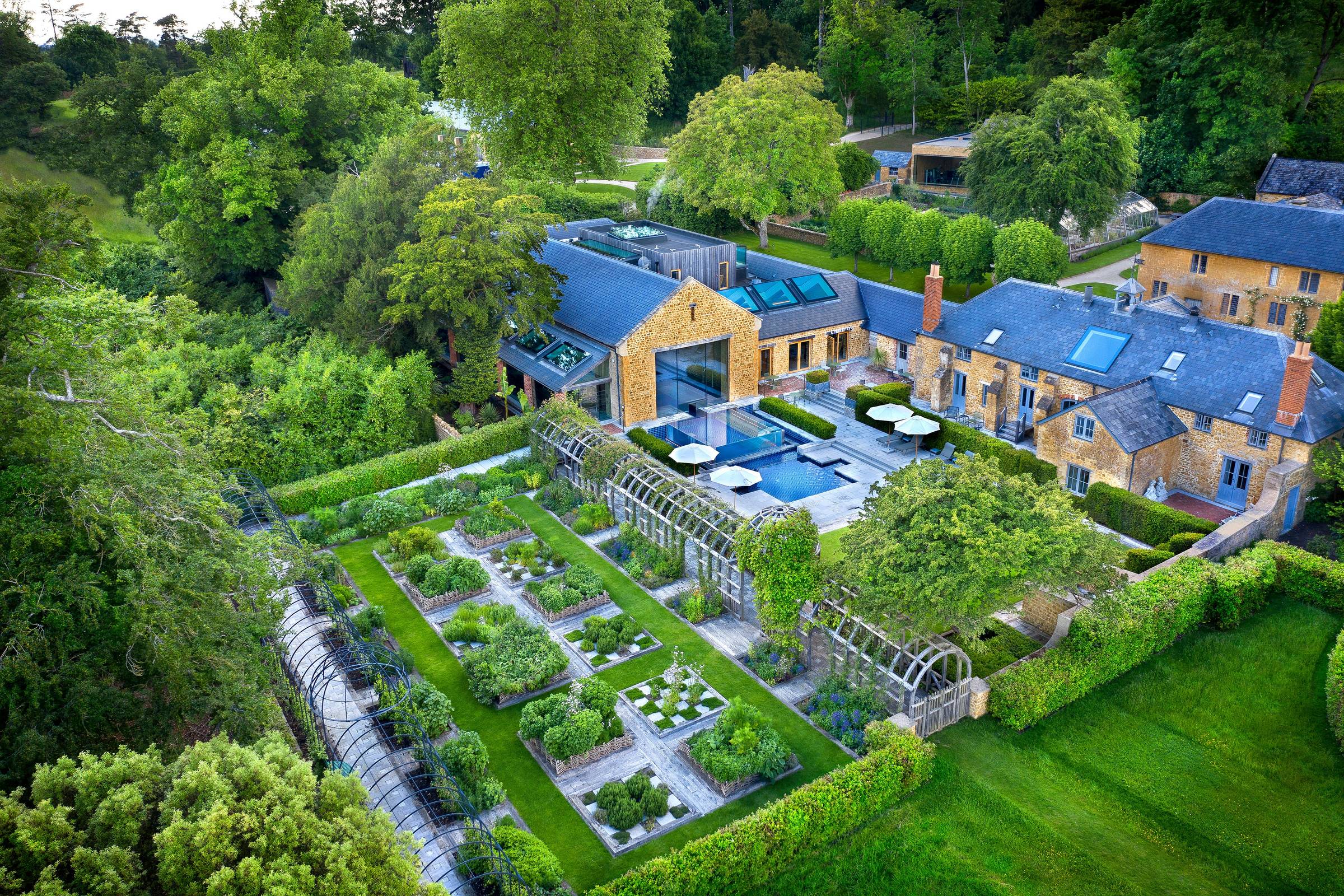 |
800 acres of working English estate. 3,000 apple trees with over 450 heritage varieties. All pressed into cider on-site in the estate’s own cidery.
British White cattle graze the pastures. Estate-reared lamb and venison. Kitchen gardens with 350+ varieties of fruits, vegetables, and herbs feeding two restaurants.
They discovered Roman ruins on the estate and built a full-scale recreation of a 4th-century Romano-British villa directly on those ruins – Villa Ventorum.
You can tour the archaeological site, see the original Roman foundations, then step into the reconstructed villa.
Beekeeping sanctuary where guests learn traditional apiculture. Victorian railway carriage serving afternoon tea. Willow basket-weaving workshops teaching century-old crafts.
Named Best Boutique Hotel in the World in 2023. Number 37 on the World’s 50 Best Hotels list in 2024.
The Newt integrates 2,000 years of agricultural history into a single working estate.
Same owners of Babylonstoren in South Africa – so it’s no surprise The Newt is also an absolute masterpiece.
How European Farm Hotels Operate Differently
Seven very different properties. England to Tuscany to Andalusia to Portugal to Hampshire to Corsica to Greece.
But they operate on a fundamentally different model than American farm resorts:
1. They maximize land-to-guest ratios instead of room count
Finca La Donaira: 1,700 acres, 9 suites. That’s 188 acres per suite.
Domaine de Murtoli: 6,000 acres scattered with restored 17th-century shepherds’ houses.
Borgo Santo Pietro: 300 acres, 22 rooms.
The Newt: 800 acres, 23 rooms.
European properties run smaller guest counts. The exclusivity is built into land ownership and heritage preservation economics.
American properties scale differently. Blackberry Farm: 4,200 acres, 62 accommodations. Southall: 325 acres, 78 keys total.
Neither approach is wrong. The economics work differently when you’re restoring centuries-old estates versus building new infrastructure.
2. They work with authentic historic structures
Borgo Santo Pietro restored a 13th-century villa under Italian preservation laws.
Domaine de Murtoli converted 17th-century shepherds’ houses.
The Newt incorporated actual Roman ruins discovered on property.
The architecture isn’t styled to evoke heritage – it IS the heritage. You’re sleeping in buildings that were actually used for agriculture for centuries.
American properties pursue reinterpretation. Most are new construction designed to reference agrarian heritage. Blackberry Farm expanded from a 1976 inn with new buildings styled like Appalachian homesteads. Southall was built from the ground up in 2022.
Both can work. But European properties have authenticity built into the bones of every building.
3. They focus on regional specialization
European farm hotels do what their specific region has done for centuries.
Tuscan estates make wine and olive oil. Spanish fincas breed horses and press olive oil. Portuguese quintas focus on cork and wine. English estates press cider and raise heritage livestock. Corsican domains practice transhumance.
It’s traditional polyculture family farming – artisanal and quality-focused.
American properties often embrace innovation to scale output. Southall has hydroponic greenhouses for year-round production. Brush Creek harvests 100,000 pounds annually from high-tech greenhouses.
Again, neither is wrong. But European properties create a different connection to place. You’re tasting what this specific region and land has produced for generations.
Takeaways for Operators
European agritourism was shaped by necessity. In the 1970s and 80s, governments created incentives for farmers to host guests as a way to preserve rural life and keep family farms viable.
In Italy, agriturismi are legally required to derive a certain percentage of income from farming. You can’t just build a hotel and add some gardens.
That regulatory framework forced authenticity.
American operators haven’t faced the same constraints. We can build farm hospitality properties faster and at larger scale.
That creates both opportunity and risk.
We can develop ambitious projects with more rooms, more amenities, more programming.
But at the same time, we can too easily make the farm decorative rather than foundational.
European properties prove that smaller guest counts, historic preservation, and regional specialization can command premium rates when the authenticity is genuine.
Nine suites across 1,700 acres works when the farm story is compelling enough. Twenty-two rooms in a 13th-century borgo works when every meal uses ingredients grown on-site.
The lesson isn’t that American operators should copy the European model. We’re working with different contexts and different constraints.
But we can learn from the fundamental principle:
The farms at these European properties aren’t amenities supporting the hotel. The hotels are amenities supporting the farm.
When you get that relationship right, guests sense it immediately. And they pay premium rates to experience it.