Jan 27, 2026
Aman's Building Something Wild in Beverly Hills
How connecting guests with nature became hospitality's most powerful differentiator...
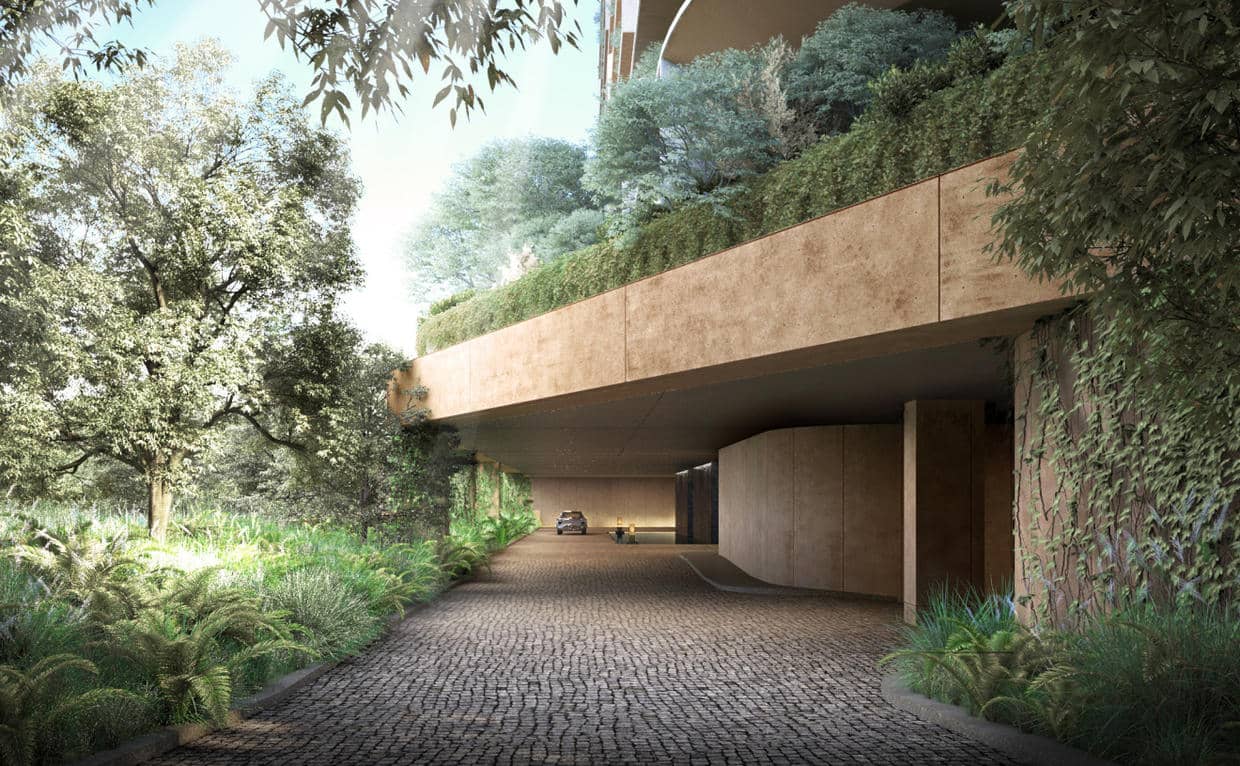
This $10-billion development looks like it’s in Singapore.
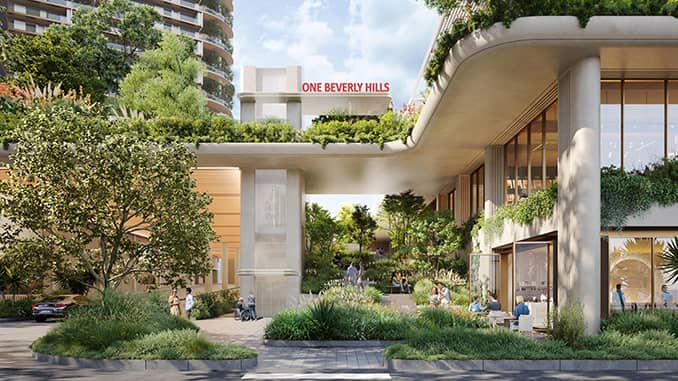
Vertical gardens cascading down luxury towers. Buildings enveloped by foliage. 10 acres of botanical gardens integrated into the architecture.
But it’s not in Singapore.
It’s in Beverly Hills. Opening in 2027.
And we love that this style is finally coming to America at scale.
Aman Beverly Hills
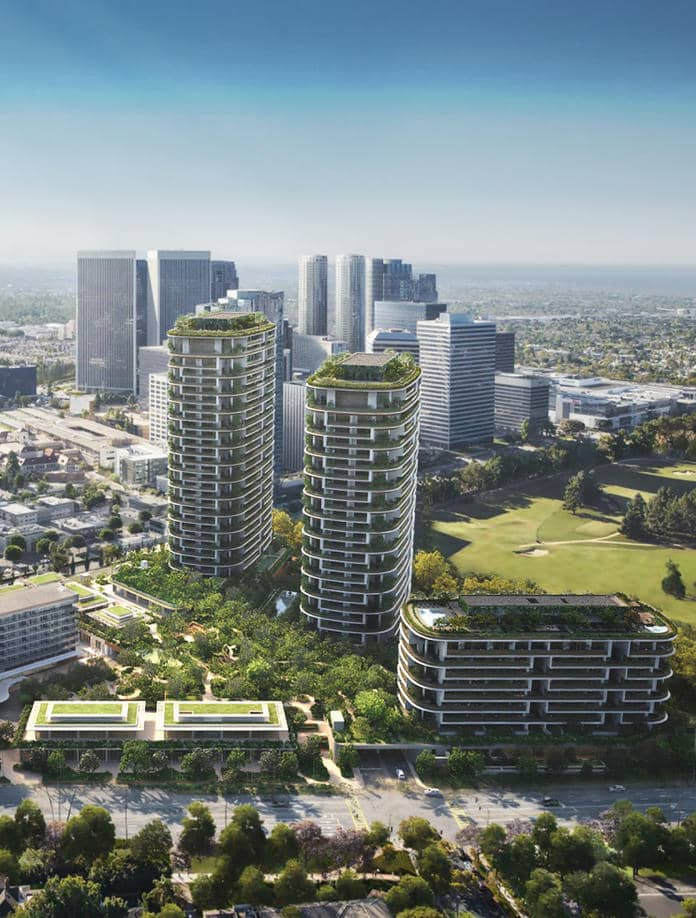
This is the centerpiece of One Beverly Hills, a $10-billion mixed-use development now under construction at the intersection of Wilshire and Santa Monica Boulevards.
Possibly the biggest development project in LA in a decade.
17.5 acres and at the center sits a 10-story Aman Beverly Hills hotel with 78 all-suite guest rooms. Aman’s first West Coast property.
Connected to the hotel are two Aman-branded residential towers. Units priced from $20 million to $40+ million. The first residential tower already approaching $1 billion in contracted sales before opening.
All residents become members of the exclusive Aman Club. 100,000 square feet with flagship Aman Spa, fitness centers, pools, and dining venues. Membership initiation fees around $200,000 with $20,000 annual dues.
Here’s what makes it unprecedented:
Nearly half the land is being turned into botanical gardens – 10 acres total.
4.5 acres open to the public as a new park. 4 acres reserved for residents, club members, and hotel guests.
Over 200 species of native California plants. Vertical gardens, rooftop greenery, and planted terraces creating a resort-like atmosphere in an urban location.
The gardens use collected rainwater and recycled graywater for 100% of irrigation needs. Saving millions of gallons of water annually in drought-prone California.
The design was led by Foster + Partners for the master plan and Kerry Hill Architects for the Aman buildings.
The commitment and capital required to do something at this level is extraordinary. Co-developed by Cain International and OKO Group with $10 billion in investment.
This is Beverly Hills’ answer to trends seen in Dubai and Asia. Luxury towers with branded residences and private clubs. But with 10 acres of botanical gardens woven throughout.
And Aman wouldn’t sign off unless it’s Aman-worthy.
 |
Why we're obsessed with this design philosophy
We’ve been obsessed with biophilic design and how it has been revolutionizing hospitality.
The idea that our spaces should actually connect us with nature instead of isolating us from it.
We’ve swung so far toward cold, sterile minimalism in design that we’ve forgotten something so fundamental:
Humans crave connection with nature.
Biophilic design isn’t just adding some plants to a lobby and calling it a day.
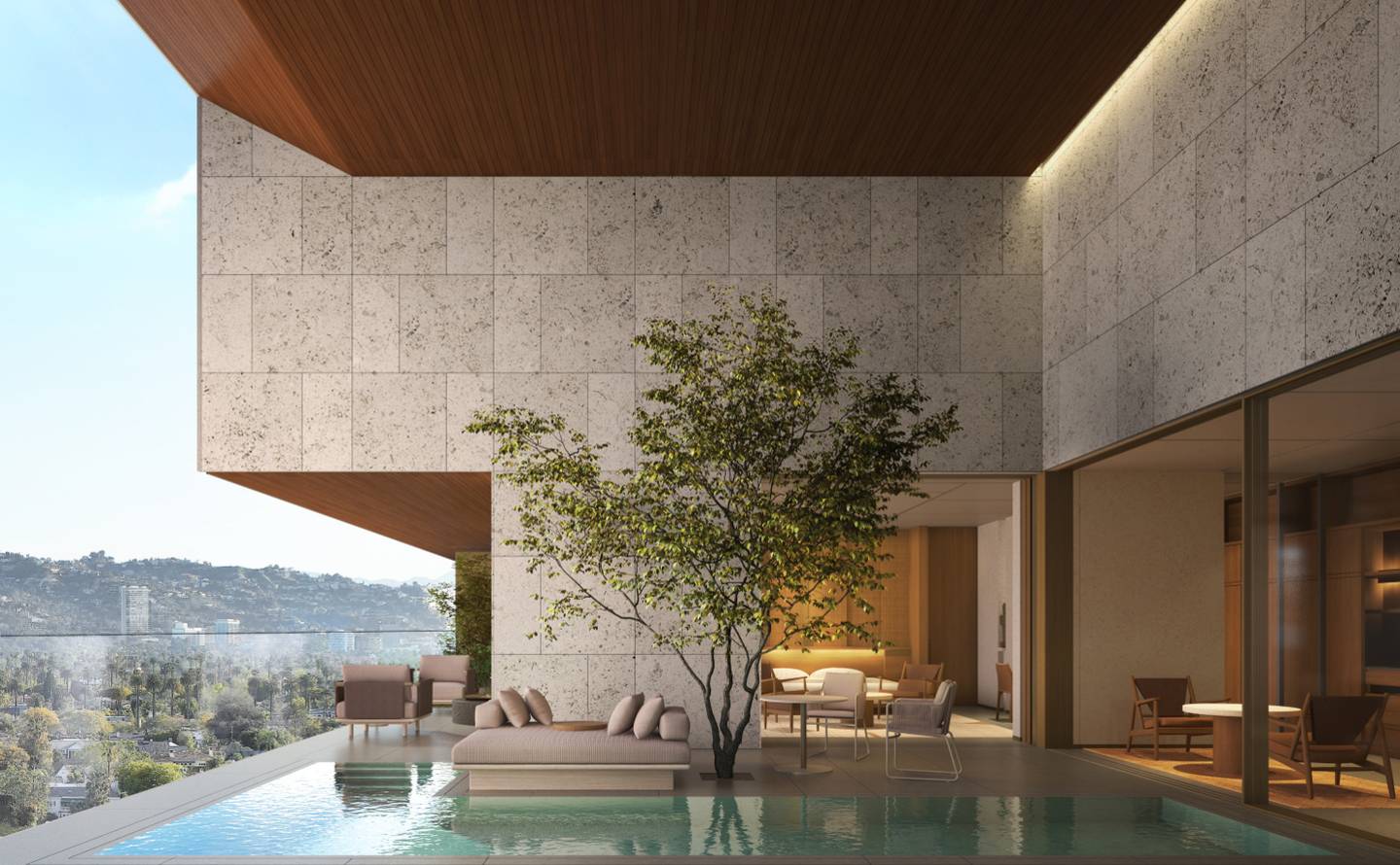
It’s natural light that changes throughout the day. Water features you can hear and feel. Organic materials that invite touch. Views of greenery and landscapes. Spaces that create that feeling of refuge we all seek.
The core idea is that humans have a deep, instinctive connection to the natural world. When we design buildings and spaces that honor that connection, people feel calmer, more creative, and more restored.
There’s something magical that happens when you step into a space that truly connects you with nature. It’s that feeling you get in a treehouse surrounded by a canopy, or sitting in a glass pavilion during a rainstorm.
A window perfectly framed to capture morning light filtering through leaves. The sound of water trickling nearby. Materials that feel warm and lived-in rather than cold and untouchable.
It taps into something primal. That sense of refuge that makes us feel both safe and inspired at the same time.
When you’re designing hospitality experiences, that emotional response is everything.
 |
Singapore got this right years ago
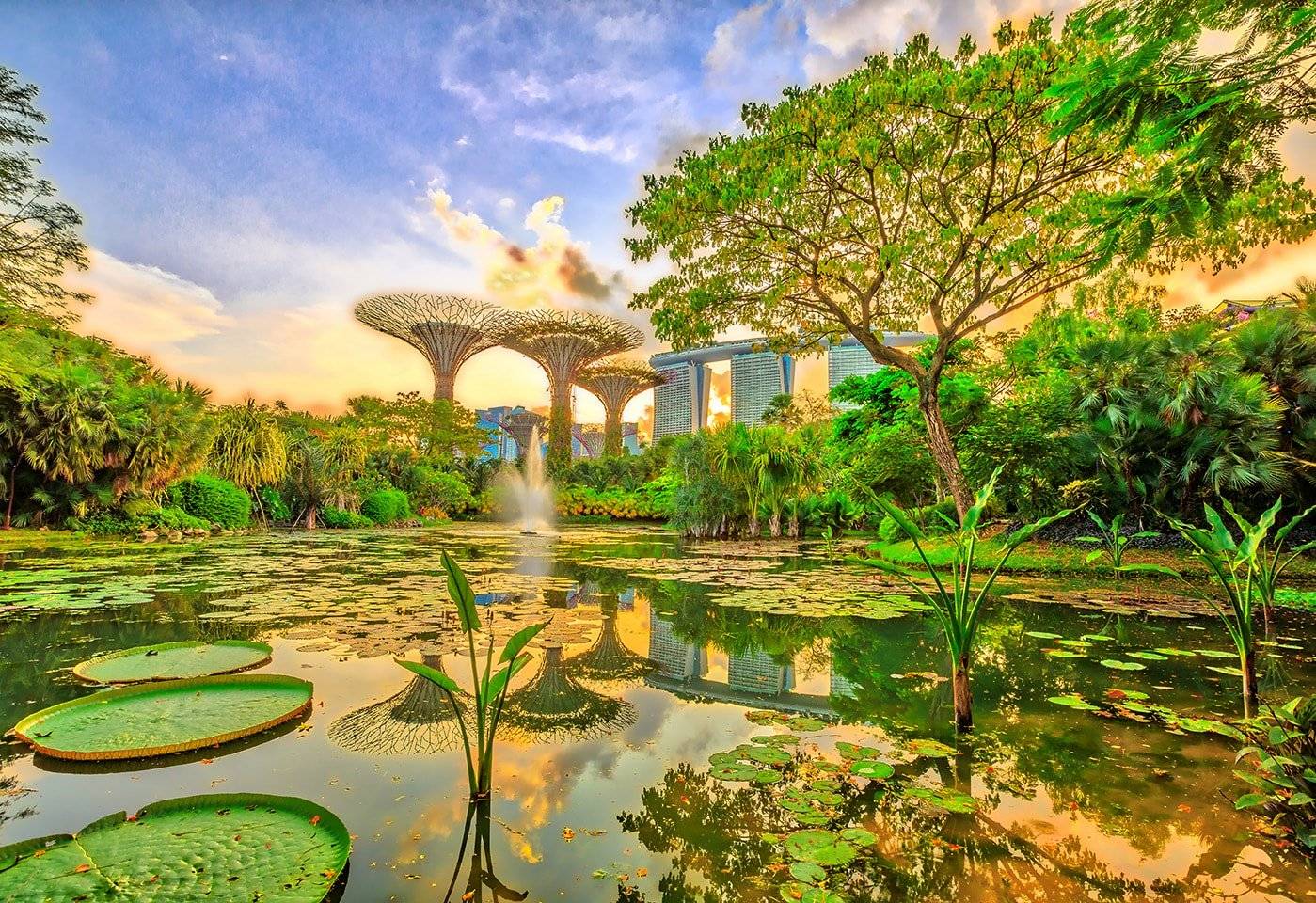
Singapore has fully embraced this approach to architecture.
The PARKROYAL on Pickering literally doubles its site’s greenery through sky terraces, cascading planters, and reflective pools. Walking through it feels like exploring a vertical garden that happens to have hotel rooms.
Gardens by the Bay features massive Supertree structures that combine vertical gardens with solar energy collection. It’s become one of the world’s most visited attractions while serving real environmental functions.
Khoo Teck Puat Hospital integrated extensive gardens and natural light throughout the facility. As a result, they have measurably faster patient recovery times and lower staff burnout – real health benefits from biophilic design.
 |
This has shaped everything we’ve built
While we didn’t always realize what it was called, we’ve incorporated biophilic design into many of our projects. It’s simply the design style we're most drawn to.
Our treehouses, green roofs, and all of our unique unit designs prioritize connection between guests and the surrounding landscape.
We design units to preserve existing trees and work with natural topography. Floor-to-ceiling windows dissolve the boundary between inside and outside. Private outdoor soaking tubs let guests feel completely immersed in nature while maintaining privacy.
Our experiences extend that connection. Nature walks, stargazing experiences, forest bathing. Turning the landscape into part of the guest experience rather than just a backdrop.
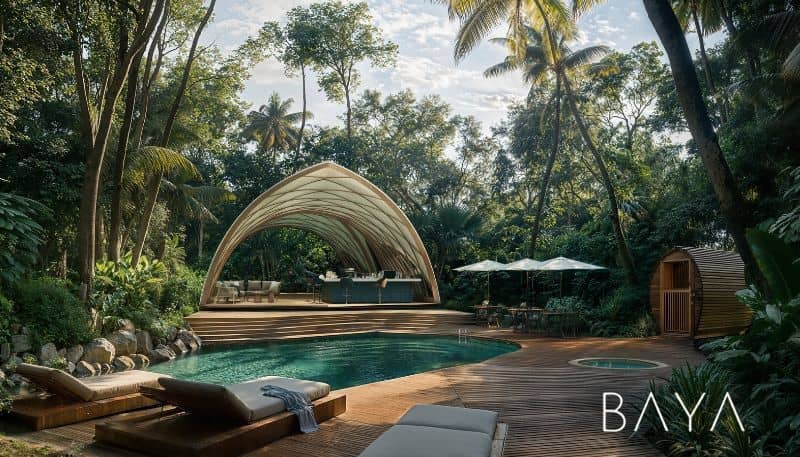
Our next project, Baya in South Florida, will even further embrace this design philosophy with bungalows integrated into an exotic fruit forest and natural grottos tucked into lush palm groves.
The results are stays that feel restorative rather than just luxurious. Guests who remember their stays long after they leave because of the reconnection to nature that they experienced.
 |
Why this is the future of hospitality
We think we’re at a turning point in design.
After decades of pushing toward increasingly minimal, sterile, tech-forward spaces, people are craving something more human and authentic.
Modern travelers are seeking experiences that feel restorative and grounding. They want to disconnect from screens and reconnect with something real.
Biophilic design delivers that in a way that cold luxury simply can’t.
For properties, it creates differentiation that’s nearly impossible to replicate.
Anyone can buy the same furniture or hire the same interior designer. But your specific landscape, your local materials, your unique relationship with the natural environment? That’s yours alone.
We’ve been deprived of green spaces and natural materials for so long that properties offering an authentic connection with nature will stand out dramatically.
That’s why we're so excited about Aman Beverly Hills.
Innovation in design often starts at the high end before trickling down. Yes, this project is ultra-exclusive. Most people won’t be able to afford a $30 million Aman residence or a $200,000 club membership.
But this project is proving biophilic design can work at scale in dense urban environments. In America. At the highest level of luxury.
If this succeeds, we’ll see more of it. And eventually, these principles become more accessible.
 |
The takeaway for operators
You don’t need $10 billion to embrace biophilic design.
You need to think differently about how your property connects guests with nature.
What’s your landscape? How can you preserve and enhance it rather than pave over it?
Where can you introduce natural light? Water features? Organic materials?
How can you create moments where guests feel that sense of refuge and connection?
The most successful properties I’ve seen don’t try to compete on amenities or square footage. They compete on how they make people feel.
And nothing makes people feel more restored than genuine connection with nature.