Jan 13, 2026
Why We're Using Land Leases for Baya and Why It's a Win-Win for Farmers
Breaking down the good (and bad) of leases in the hospitality space...
There’s been a lot of conversation recently about leases in hospitality.
Most of it centers on the spectacular failures we’ve been watching – master lease companies like Sonder collapsing under fixed costs and misaligned incentives.
But there’s a different lease model that actually works. One that aligns incentives, preserves capital, and unlocks developments that wouldn’t pencil otherwise.
We’re using it for Baya.
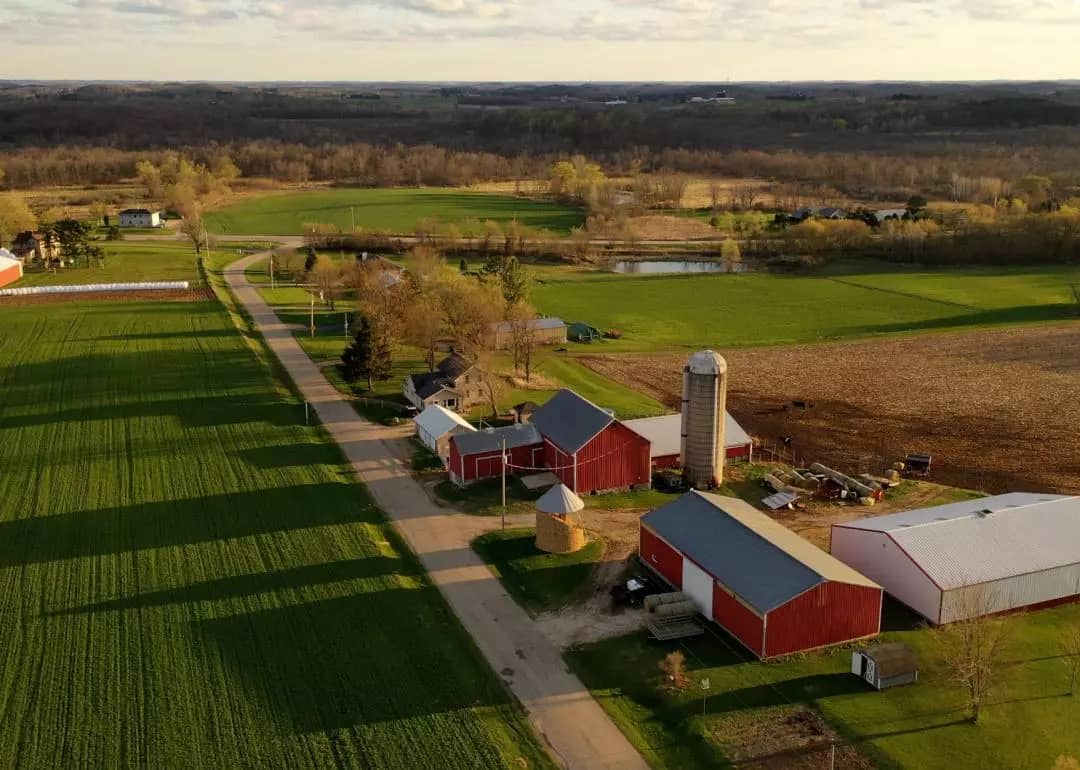
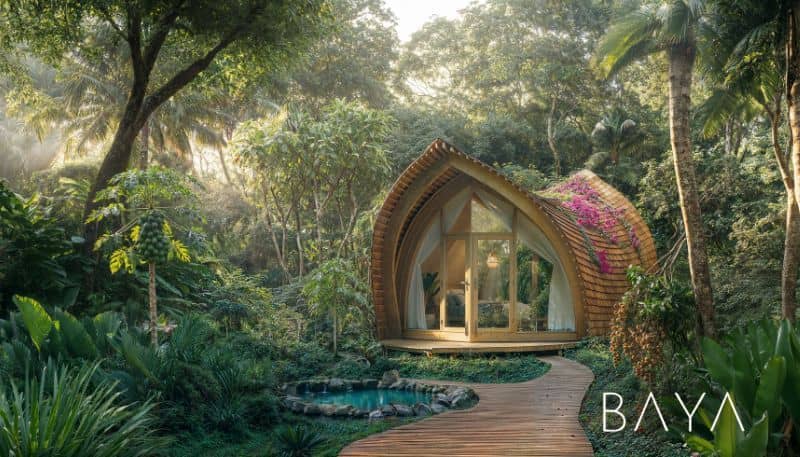
We have a 99-year lease on 25 acres of tropical fruit farm in South Florida’s Redlands. The farm stays with the family who owns it, they continue farming, and we build the hotel around the agricultural operation. The lease is structured as a percentage of net revenue.
For the farmer, that’s 3-4x what they’d earn from agriculture alone. For us, it’s multiples less than financing a land purchase would cost.
It’s a win-win.
The landowner generates significant cashflow with minimal CapEx, we preserve capital for the actual hotel build, and because payments are variable based on revenue, incentives stay aligned. When we perform well, the landowner performs well.
This stands in sharp contrast to what we’ve been watching in the industry.
Why Master Leases Fail
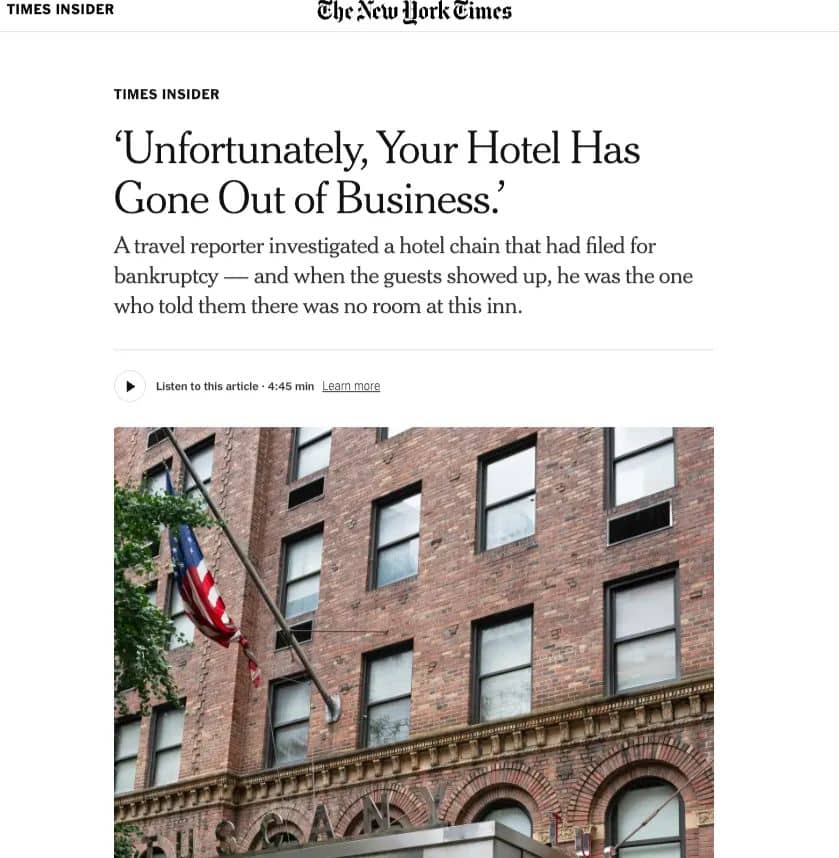 |
Sonder shut down operations and filed for bankruptcy – this was a huge one.
LuxUrban Hotels also filed for bankruptcy in September. By October, Chapter 7 liquidation. Hotels closed immediately. Guests without rooms. Employees without pay. Properties abandoned.
Same story as The Guild and Lyric.
Master lease arbitrage businesses with fixed cost leases they couldn’t sustain and misaligned incentives with property owners.
There’s a reason these models keep failing. And there’s a reason land leases work.
Master lease companies were in the lease arbitrage business chasing tech valuations and VC-backed growth.
They leased hotel-zoned buildings and paid fixed costs based on full revenue potential – including F&B, ancillary revenue, and group sales they weren’t capturing as apart-hotel operators.
When revenue dropped, they still owed the same lease payment. No flexibility. Add high-interest cash advances to fuel scaling and the economics never worked.
It’s a unit economics business being treated like a tech startup. All arbitrages come to an end.
Why Land Leases Are Different
When we first looked at using a land lease for Baya, it did make us pause.
We'd always owned the dirt with previous properties. Land ownership felt like the foundation of hotel development.
But we came to see the land lease as a competitive advantage.
With a 99-year lease, we can still sell the property at a cap rate like we own it. We can finance with traditional debt. We get most of the benefits of ownership.
But we put way less money down upfront.
Our cost of purchasing the land and paying monthly mortgage payments would have been cost prohibitive. We wouldn’t be able to do the project if we had to buy the land outright.
The land lease changes the economics entirely.
We’re doing a revenue share with the farmer. They keep the property in the family and generate 3-4x greater cashflow without having to invest millions in the property. We deploy capital into the hotel build instead of land acquisition.
And because the lease payment is variable based on revenue, incentives are aligned.
When revenue is down, our lease payment adjusts accordingly. There’s flexibility built into the structure that fixed-cost leases don’t have.
The Key: Aligned Incentives
The difference between master leases that fail and land leases that work comes down to structure and incentives.
Master lease companies paid fixed costs for hotel buildings. Misaligned incentives with the property owner.
Any lease – whether it’s land, a hotel building, or an urban core property – structured with variable revenue shares keeps everyone aligned.
The landowner wants the hotel to succeed because their income increases with hotel performance. We want the hotel to succeed for the same reason. We’re rowing in the same direction.
Variable revenue structures also protect operators from the massive liability that put companies like Sonder under. When revenue drops, your lease payment adjusts. You’re not stuck with a fixed cost you can’t sustain.
And because we’re locking up the property for 99 years, we have the long-term security to build something significant. We’re not worried about a lease renewal in 5 or 10 years.
That long-term horizon is critical for landscape hotels and experiential properties where you’re making substantial infrastructure investments.
Why This Model Works for Landscape Hotels
Land leases make particular sense for landscape hotels and farm hospitality projects.
You’re building on land that has existing agricultural use or natural landscape value. The landowner often wants to preserve that use while generating income from their property.
For Baya, the farmer wants to keep farming. The agricultural operation is central to what we’re building – it’s not decoration, it’s foundational.
A land lease lets us build the hotel around the existing farm without the farmer having to sell and lose the property.
The same model works in prime urban environments where land costs are prohibitive. None of this is news to hotel developer veterans, but a lot of people getting into hotel development still don’t know about it.
You can structure a land lease that’s often less expensive than financing a land purchase. And you can still get traditional debt financing for the improvements you’re building on the land.
Building a Multi-Location Roadmap
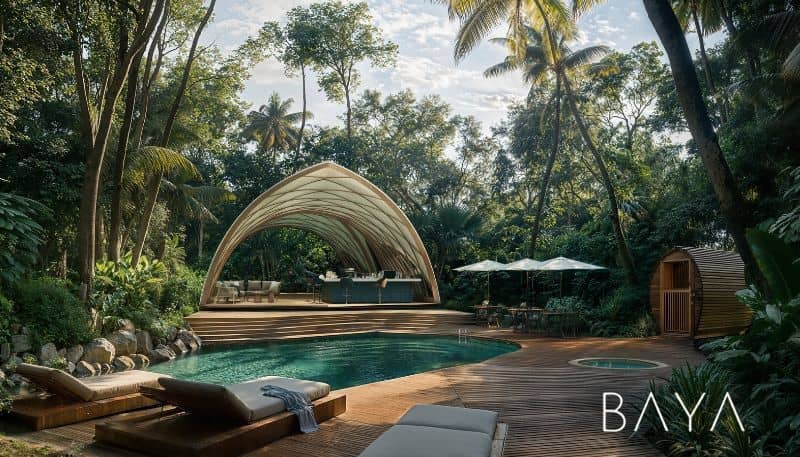 |
The land lease model allows us to build out a multi-location roadmap for Baya with minimal dollars down to secure land.
Instead of tying up millions in land acquisition for location one, we’re preserving capital to move faster on locations 2 through 15.
We can lock up prime agricultural properties with land leases, prove the concept with location one, and rapidly expand because we’re not capital-constrained by land purchases. **That’s the competitive advantage.
We’re actually actively looking for farm partners across North America who want to unlock this same opportunity. For future locations, we’re considering 3-7% of net revenue – that’s revenue less taxes and fees – depending on the value of the land and Baya’s revenue potential at each property.
There’s a lot of potential with this model that we’re seeing.
What Makes a Land Lease Work
Not all leases are created equal.
For a land lease to work in hospitality, you need:
Long-term security. A 99-year lease gives you the same planning horizon as ownership. Anything shorter creates uncertainty that limits your ability to finance and build long-term value.
Variable payment structure. Revenue-based lease payments keep incentives aligned and provide flexibility during downturns. Fixed costs create the same problems that killed the master lease companies.
Reasonable percentage. We’re targeting 3-7% of revenue for land lease payments. That has to make sense within your overall operating model. If the percentage is too high, the economics don’t work.
Aligned vision. The landowner needs to understand and support what you’re building. For Baya, the farmer values keeping the agricultural operation active and sees the hotel as complementary, not competing with that vision.
Traditional financing available. Make sure your lease structure allows for traditional debt financing. Lenders need to be comfortable with the lease terms and duration.
What This Means for Developers
If you’re trying to build a landscape hotel, a farm hospitality project, or any hotel in a market with expensive land, don’t sleep on the land lease model.
It’s not the right structure for every project. But when it works, it unlocks developments that wouldn’t pencil otherwise.
The key is structuring it correctly from the start.
Variable revenue share instead of fixed costs. Long-term security. Aligned incentives with the landowner. And making sure the economics work for both parties.
When those pieces are in place, land leases can be a competitive advantage.
For Baya, it’s what made the project possible.